Advanced · 23 Oct 2026 · Indexer Online Team
How to Index Tier 2 Backlinks Safely (Without Risking Your Money Site)
An advanced guide to indexing tier 2 backlinks safely: audit tier 1 first, keep quality up, index in the right order, and avoid the common mistakes.
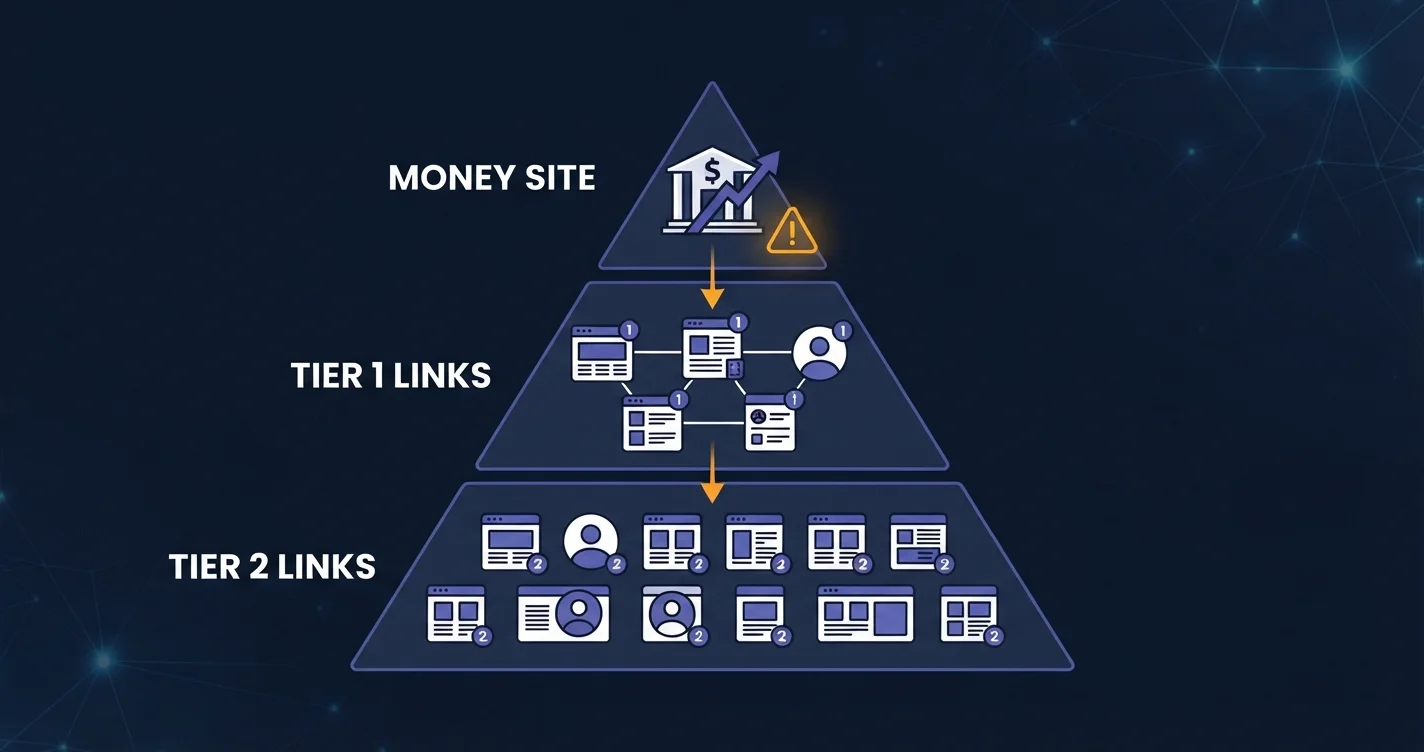
Short answer: to index tier 2 backlinks safely, first index-check your tier 1 links. Build tier 2 only for healthy tier 1 pages that are still not indexed, keep tier 2 small and relevant, never point it at your money site, and submit it with a drip feed after tier 1 has had two to three weeks on its own.
Tier 2 backlinks point to your tier 1 links, not to your money site. This guide assumes you already know what link tiers are, so it focuses on the technical side: what to index, what to leave alone, and which mistakes put your money site at risk.
First, a clear warning. Google's spam policies treat links built mainly to manipulate rankings as link spam, and tiered link building often falls into that category. The safest tier 2 is small, relevant and made of pages that could exist on their own.
Safe vs risky tier 2 at a glance
| Safer | Risky | |
|---|---|---|
| Target | Healthy tier 1 pages that are not indexed yet | Every tier 1 link, or the money site |
| Pages | Real content: web 2.0 posts, relevant forum answers | Spun articles, auto-generated pages, comment blasts |
| Anchors | Branded, generic or the page title | Exact-match money keywords |
| Volume | A few links per tier 1 page | Hundreds per page |
| Timing | After tier 1 has had 2–3 weeks, with a drip feed | Same day as tier 1, all at once |
What is tier 2 actually for?
A tier 1 link on a new or rarely crawled page may never get indexed. Tier 2 links give Google more paths to that page, so it gets discovered and crawled sooner. In theory they also pass some value, although that effect is small and hard to measure.
In other words, the main job of tier 2 is discovery. If a tier 1 page is already indexed, adding a tier 2 layer to it rarely achieves much.
⚠️ Common mistake: building tier 2 for every tier 1 link by default. Check first. If Google has already indexed the tier 1 page, a second tier adds risk without a clear benefit.
Step 1: Audit tier 1 before you touch tier 2
Run all tier 1 URLs through an index check. Then split them into three groups:
- Indexed: leave them alone.
- Not indexed but healthy: the page loads, has your link, has no
noindex. These are the only candidates for tier 2. - Not indexed and broken: 404,
noindex, canonical pointing elsewhere, or link removed. Fix or replace these; tier 2 cannot help them.
Our free Backlink Checker shows the blockers for up to ten URLs at a time.
⚠️ Common mistake: pointing tier 2 links at a tier 1 page that has a
noindextag. Google will not index it regardless of how many links it gets.
Step 2: Keep tier 2 quality above "spam"
The quality of tier 2 matters more than people think. Google can follow a chain of links, and a tier 1 page surrounded by obvious spam starts to look like part of a network.
- Prefer real pages with some unique text: web 2.0 posts with actual content, relevant forum answers, social posts that describe the page.
- Avoid auto-generated pages, spun articles and mass comment blasts.
- Keep anchors natural. Tier 2 anchors can be generic or branded; they do not need exact-match keywords.
- Keep the numbers small. A few links per tier 1 page is usually enough for discovery.
⚠️ Common mistake: using exact-match money keywords as tier 2 anchors. This creates an unnatural anchor profile around your tier 1 pages and adds nothing to discovery.
Step 3: Never let tier 2 point at the money site
This sounds obvious, yet it happens all the time: a tool picks up the wrong URL list, or a freelancer "helps" by adding a few links to the homepage. Therefore, check every tier 2 target list before it goes out. Only tier 1 URLs belong there.
⚠️ Common mistake: mixing tier 1 and money-site URLs in the same spreadsheet. Keep them in separate files and separate indexing campaigns.
Step 4: Index in the right order
- Submit tier 1 first. Give it two to three weeks. Many tier 1 pages get indexed without any tier 2 at all.
- Re-check tier 1. Only the healthy pages that are still missing move on to tier 2.
- Build tier 2 for those pages. Then submit the tier 2 URLs with a drip feed over one to two weeks.
- Re-check tier 1 again. The goal was tier 1 indexing, so that is what you measure.
⚠️ Common mistake: submitting tier 1 and tier 2 on the same day. You lose the ability to tell whether tier 2 made any difference, and you send a burst of related URLs at once.
Step 5: Measure, then stop
Tier 2 is a tool, not a habit. If a tier 1 page is still not indexed after tier 2 has had several weeks to work, the page itself is the problem. At that point, more links only add risk. Instead, replace the tier 1 link with a better placement.
For the reasons a page may refuse to get indexed, read why Google is not indexing your backlinks.
FAQ
Is tier 2 link building safe?
It carries risk, because Google's spam policies target links built to manipulate rankings. Small, relevant tier 2 links used for discovery are far less risky than mass, automated tier 2 campaigns.
Should I index tier 2 backlinks at all?
Only if the tier 2 pages have real content and point to healthy tier 1 pages that are still not indexed. Otherwise, it is better to skip tier 2 entirely.
How many tier 2 links does a tier 1 page need?
For discovery, a few are usually enough. Large numbers rarely help and make the pattern more obvious.
Can tier 2 links hurt my money site?
They can if they point to it directly, or if they make your tier 1 pages look like part of a spam network. Keep tier 2 away from the money site and keep its quality reasonable.