Guides · 20 Oct 2026 · Indexer Online Team
How SEO Teams Use a Backlink Indexer: 3 Example Workflows
How an agency, an affiliate site and an online store can fit backlink indexing into a clear check–submit–verify process, step by step.
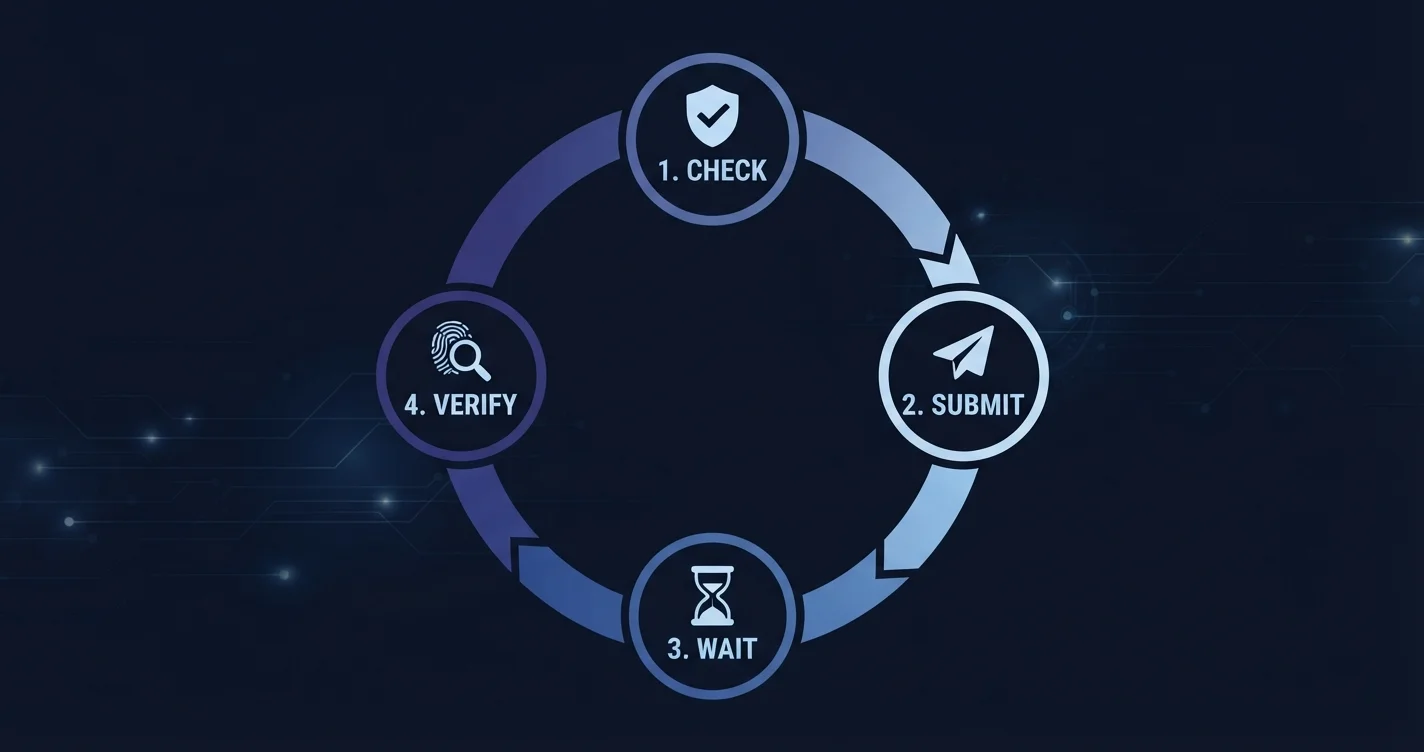
Short answer: SEO teams use a backlink indexer as one step in a check–submit–verify loop. They remove pages that cannot be indexed, submit the rest with a drip feed, check which pages Google indexed after two to four weeks, and fix or replace the links that failed. The indexer is the middle step, not the whole process.
This article walks through that loop in three different situations: an agency, an affiliate site and an online store. The three stories are example scenarios, not real client results. We built them from the problems SEO teams describe most often, so that you can see how the steps fit together in practice. The numbers are there to illustrate the process, not to promise an outcome.
The workflow at a glance
| Step | What the team does | Tool |
|---|---|---|
| 1. Check | Remove broken pages, removed links and noindex pages | Backlink Checker |
| 2. Submit | Send the healthy pages for crawling, spread over several days | Backlink indexer with drip feed |
| 3. Wait | Give Google two to four weeks | — |
| 4. Verify | Check which pages Google indexed | Index checker |
| 5. Act | Fix, replace or drop the pages that failed | Link seller or site owner |
In each scenario below the pattern is the same. What changes is the scale and the reason behind it.
Scenario 1: The agency with a monthly link report
Picture a small agency that builds around 150 links a month for eight clients. At the end of every month, the account manager sends each client a report. For a long time, that report simply listed the URLs the link team delivered.
Then a client asked a simple question: "Which of these links does Google actually see?" Nobody knew. So the team changed its process.
First, they started running every new batch through a backlink checker before reporting it. In a typical batch, a handful of pages turned out to be broken, a few had a noindex tag, and one or two no longer contained the link at all. Those went straight back to the link seller as replacement requests.
Next, they sent the remaining URLs for indexing with a drip feed over a week, so the batch did not hit Google all at once. After three weeks, they ran an index check on the whole batch and added a new column to the client report: indexed / not indexed.
The effect was less about the numbers and more about trust. Clients could now see which links counted. Meanwhile, the team finally had data on which link sellers delivered pages that Google kept, and which did not.
Scenario 2: The affiliate site that stopped wasting its budget
Now imagine a solo affiliate marketer who buys guest posts to push a few money pages. The budget is tight, so every link has to earn its place.
For months, she paid for placements and waited for rankings to move. Some pages climbed, others did not, and she could not tell why. When she finally checked, a large share of her guest posts sat on pages that Google had never indexed.
Instead of buying more links, she changed what she bought. Before paying, she now asks the seller for a sample of existing posts on the site and checks whether Google indexed them. If most are missing, she skips the site entirely. After placement, she submits the new URL once, checks it again after two to three weeks, and asks for a replacement if it is still missing after six.
As a result, she spends the same budget on fewer, better links. More importantly, every link in her spreadsheet now has a known status, so she can judge a seller by facts rather than promises.
Scenario 3: The online store with thousands of product pages
The third case looks different, because the pages that need indexing belong to the store itself. Consider a shop with several thousand product and category pages. Many new products never appear in Google, even weeks after launch.
Here, Google Search Console does most of the work, since the team owns the site. They inspect sample URLs and find two statuses again and again: "Discovered – currently not indexed" and "Crawled – currently not indexed". The first one points to discovery and crawl budget. The second one points to thin or duplicate content.
So the team works on both sides. On the content side, they merge near-identical product variants and write real descriptions for their most important products. On the discovery side, they link new products from category pages and the homepage, and keep the sitemap clean.
Backlinks come into play for their outreach campaigns. Whenever a blogger features one of their products, the team checks that the article is live, sends it for indexing if it is new, and verifies it a few weeks later. That way, the links they worked hardest for do not sit unnoticed. For store pages that still refuse to get indexed, our guide to Crawled – currently not indexed covers the fixes in detail.
What do the three teams have in common?
None of them treats indexing as magic. They all use a backlink indexer as one step in the loop from the table above, and they all measure the result.
That process is why real SEOs use a backlink indexer: not because it guarantees results, but because it turns "we hope Google finds it" into something they can track and improve. If you want to run the same loop on your own links, you can see how Indexer Online works and start with the free credits.